


Sic Bo
The Enduring Appeal of Sic Bo: History, Rules, Bets and Strategies for an Exciting Dice Game
Sic Bo, sometimes called Tai Sai, Dai Siu, Hi‑Lo or simply Big and Small, is a fast‑paced casino game built around the ancient thrill of tossing dice. Despite its exotic name, the rules are straightforward: three six‑sided dice are placed in a shaker, the player wagers on what will appear, and the dice are revealed. This blend of simplicity and suspense has kept Sic Bo popular from its origins in China’s port cities to modern casinos in Macau, Las Vegas and online platforms. Whether you are a beginner seeking a fun table game or an experienced gambler looking for variety, understanding the mechanics of Sic Bo and managing your bets will help you get the most enjoyment from this classic.
Origins and Spread of Sic Bo
Sic Bo means “precious dice” in Chinese, an apt description for a game that dates back hundreds of years. Historically it was played with two bricks or tiles; eventually it evolved into a dice game played by sailors and merchants in Shanghai. Chinese immigrants carried the game overseas in the early 20th century, introducing it to gambling halls in the United States. Today Sic Bo sits alongside roulette, blackjack and craps in gambling resorts around the world, and software versions make it accessible on websites and mobile apps.
Equipment and Table Layout
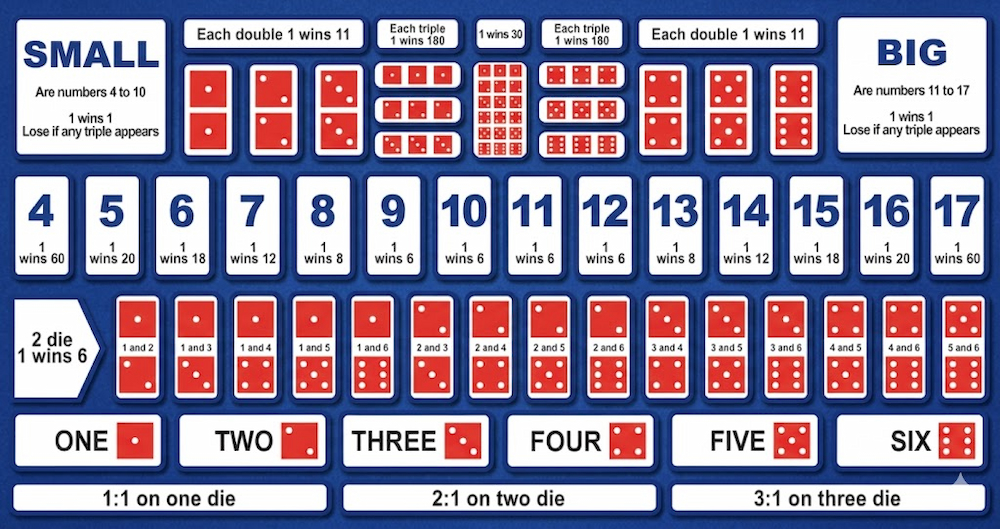
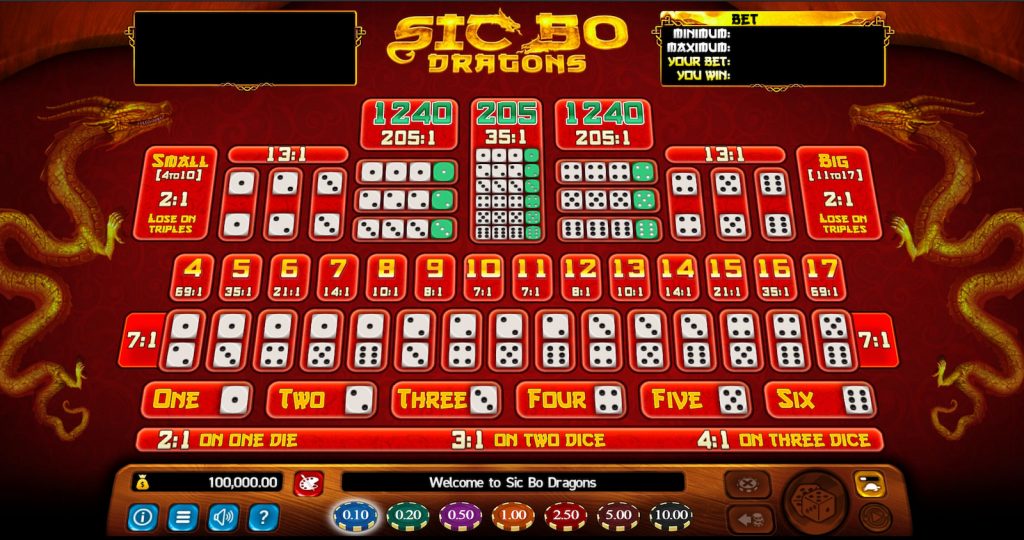
At its core, Sic Bo is played with three standard six‑sided dice. In a physical casino the dice are placed inside a small chest or transparent dome; the dealer shakes the container and then reveals the numbers. Modern tables often use an electronic shaker activated at the push of a button, which provides an unbiased spin and automatically lights up winning areas on the betting layout. The table is covered with a printed grid that shows every possible bet. On one part of the layout you see areas labelled Small and Big, indicating ranges of sums; another section lists each total from 4 to 17; other boxes show pairs of numbers, triples and single numbers. Players place chips on the boxes corresponding to the outcomes they predict.
Objective and Basic Gameplay
The objective of Sic Bo is to predict the outcome of a single roll of three dice. Unlike craps, where players throw the dice themselves, in Sic Bo the dealer or software controls the roll. After placing their chips on one or more betting areas, players wait as the dice are shaken and revealed. Winning bets are paid according to the odds printed on the table; losing bets are collected. Each round stands alone: there are no point numbers to carry over or complicated sequences of rolls. This makes the game easy to learn, yet the range of bets allows for varied strategies and payouts.
Step‑By‑Step Guide
- Choose a Sic Bo table – In an online casino you can pick between random‑number‑generated (RNG) Sic Bo and live‑dealer Sic Bo. Live games stream an actual table with a human dealer, while RNG games use computer‑generated outcomes. Both formats use the same rules.
- Place your bets – Select a chip denomination and click or place your chip on the betting area you want. You can bet on multiple outcomes at once. For example, a player might put chips on the Big bet (sum 11–17) and a specific double such as 3‑3. In physical casinos, place chips clearly within the labelled box.
- Confirm and roll – Once bets are placed, the dealer announces “no more bets”, shakes the dice container or activates the electronic tumbler, and reveals the numbers. Online, you press a button to roll.
- Payouts and next round – The outcome appears on the table. Winning boxes light up and the dealer pays out according to the odds. Losing chips are collected. Bets are not carried over; if you wish to wager again, you place chips for the next roll.
Betting Options and Odds
What makes Sic Bo compelling is the diversity of bets. Each bet covers a different contingency and offers its own payout ratio and house edge. Understanding these options helps you balance risk and reward.
Small and Big Bets
These are the simplest and most popular wagers. A Small bet wins if the sum of the three dice is between 4 and 10 inclusive; a Big bet wins if the sum is between 11 and 17. Both bets lose if all three dice show the same number (a triple). Because there are 216 possible combinations of three dice, and nearly half result in a Small or Big total, the probability of winning is approximately 48.61% for each. The payout is 1:1, meaning you double your stake, and the house edge is about 2.78%, making these the lowest‑risk wagers.
Single Number Bets
Also called “Any One Number” bets, these allow you to wager on a specific face (1 through 6) showing up on any of the dice. If the chosen number appears on one die, the bet pays 1:1; if it appears on two dice, it pays 2:1; and if it appears on all three dice, it pays 3:1 in many casinos, though some Australian rules offer 12:1. The house edge ranges from 7.87% to 15.28% depending on the jurisdiction. These bets provide frequent small wins when your number hits once, but the rarer outcomes pay more.
Double and Triple Bets
- Specific Doubles – You predict that two of the dice will show the same number. For instance, betting on “double 4” wins when two or more fours appear. Payouts vary by casino; typical odds are 8:1 to 11:1, with a house edge around 18.52%.
- Any Double (Domino) – A variation called a domino (two faces) bet lets you choose two different numbers (such as 2 and 5). The bet wins if both numbers appear in the roll. The payout is usually 5:1 and the house edge is about 16.67%.
- Specific Triple (Three‑of‑a‑Kind) – The riskiest bet is wagering that all three dice will show a particular number, such as triple sixes. There is only one winning combination out of 216, so the probability is 0.46%. Depending on the jurisdiction, casinos pay 150:1, 180:1 or sometimes 190:1. The house edge can be as high as 30.09%, though some pay tables reduce it to 16.20%.
- Any Triple – Rather than specifying a number, you can bet that any three of a kind will appear. Because there are six possible triples, the chances of winning improve slightly, and payouts range between 24:1 and 31:1. The house edge on this bet remains high (up to 30.56%).
Total Sum Bets
You can wager on the exact sum of the three dice. There are 14 possible totals (4 through 17), each with its own number of winning combinations and payout odds:
- 4 or 17 – Only three combinations produce these totals (1‑1‑2, 1‑2‑1, 2‑1‑1 and similarly for 6‑6‑5). Payouts vary from 50:1 in Macau to 62:1 in Australia. The house edge ranges from 29.17% down to 12.5%, depending on the pay table.
- 5 or 16 – Six winning combinations; payouts range between 18:1 and 31:1. The house edge is roughly 11% to 47%.
- 6 or 15 – Ten combinations; pays 14:1 to 18:1. House edge is around 7.41% to 30.56%.
- 7 or 14 – Fifteen combinations; pays 12:1.
- 8 or 13 – Twenty‑one combinations; pays 8:1.
- 9 or 12 – Twenty‑five combinations; pays 6:1 in many regions, rising to 7:1 in Australia.
- 10 or 11 – Twenty‑seven combinations; usually pays 6:1. These middle totals strike a balance between probability and payout.
| Dice Total | Winning Permutations | True Probability | Standard Global Payout | Approximate House Edge |
|---|---|---|---|---|
| 4 or 17 | 3 / 216 | 1.39% | 60 to 1 (or 50:1) | 15.28% to 29.17% |
| 5 or 16 | 6 / 216 | 2.78% | 30 to 1 (or 18:1) | 13.89% to 47.22% |
| 6 or 15 | 10 / 216 | 4.63% | 18 to 1 (or 14:1) | 12.04% to 30.56% |
| 7 or 14 | 15 / 216 | 6.94% | 12 to 1 (or 12:1) | 9.72% |
| 8 or 13 | 21 / 216 | 9.72% | 8 to 1 (or 8:1) | 12.50% |
| 9 or 12 | 25 / 216 | 11.57% | 7 to 1 (or 6:1) | 7.41% to 18.98% |
| 10 or 11 | 27 / 216 | 12.50% | 6 to 1 (or 6:1) | 12.50% |
Combination Bets
Besides doubles, players can bet that two specific numbers will appear anywhere among the three dice. For example, choosing “3 and 5” wins if at least one 3 and one 5 show up in the roll. These bets commonly pay 6:1, with a house edge around 2.78%. In some casinos additional combination bets include three‑number and four‑number “hops” where you pick unique combinations; these are rarer and offer higher payouts at the cost of bigger house edges.
Even/Odd and Other Rare Bets
Some casinos, particularly in Macau, offer wagers on Odd and Even totals. An Odd bet wins when the sum of the dice is odd, while an Even bet wins on an even total; both lose on triples. Payouts are 1:1 and the house edge is 2.78%. Other uncommon bets include “Easy Hops” (three unique numbers) paying 30:1 and “Hard Hops” (two of one number plus another) paying 50:1, both with high house edges.
Understanding the House Edge
The house edge is the long‑term percentage of each bet that the casino expects to retain. In Sic Bo, house edges vary widely, from 2.78% on Big/Small, combination and odd/even bets to more than 30% on specific triples. When you choose bets, consider how often you are likely to win versus the potential reward. Low‑edge bets yield smaller but steadier returns; high‑edge bets are long shots that seldom hit. There is no bet with a zero house edge in Sic Bo, so the game remains a contest of luck rather than skill. However, knowledge of probabilities can help you manage your bankroll and extend your playing time.
Basic Strategy and Tips
Because outcomes are random, no strategy can guarantee winning, but you can manage risk and make smarter choices.
- Start with low‑risk bets – Big/Small and simple combination bets offer the best odds. New players should use these to build confidence and preserve bankroll.
- Avoid long‑shot triples early on – Specific triple bets rarely hit; even any triple has a low probability. Chasing these early can deplete your funds.
- Use modest staking – Bet only a small percentage of your bankroll per roll. Gambling guides suggest risking 1–3% of your total funds on each bet.
- Understand payouts versus true odds – Higher payouts do not reflect proportional probabilities. For example, a Small bet pays even money but wins only 48.61% of the time because triples lose. Recognizing this helps avoid overestimating returns.
- Try free games first – Many online platforms offer demo Sic Bo tables. Playing without money lets you learn the layout and experiment with bets.
- Set limits and don’t chase losses – Determine your budget and stick to it. Stop playing once you reach a win goal or loss limit. Increasing bet size after losses often leads to bigger setbacks.
- Take advantage of bonuses wisely – Online casinos sometimes provide matching deposits or free bets. These promotions can extend playtime, but always read the terms and wagering requirements.
Advanced Considerations
Experienced players sometimes employ more nuanced approaches:
Combination Betting Strategy
This method involves pairing a low‑risk bet (such as Big or Small) with a single combination bet. For example, you could place a Big bet and also wager on a specific double like 2‑2. Because the combination pays 5:1 or 6:1, a hit can offset several losses; meanwhile, the Big bet provides frequent small wins. Keep total exposure low (e.g., 5% of your bankroll per roll), and reset the strategy after several consecutive losses.
Total‑Sum Focus
Some players favour totals in the mid‑range (8 through 13). These totals have more winning combinations, so the probability of hitting is higher. Payouts are lower than extreme totals, but wins are more frequent. Combining mid‑range total bets with Big/Small wagers can diversify risk.
Progressive Betting Systems
Various betting systems like the Martingale, Paroli, and d’Alembert suggest that players adjust their stakes after wins or losses. In Sic Bo these progressions do not change the house edge. Positive progressions may maximise winning streaks but can still end abruptly; negative progressions risk substantial losses. Use such systems cautiously and never exceed your budget.
Game Variants and Regional Differences
Standard Sic Bo (Option A)
The pay table described above is typical of casinos in Australia and some American venues. It includes Small/Big bets, specific doubles and triples, total sums, two‑dice combinations and single‑number bets. Payouts are 1:1 for Small/Big, 11:1 for specific doubles, 180:1 for specific triples and 31:1 for any triple.
Fish‑Prawn (Option B)
An alternative version, known as Hoo Hey How or Fish Prawn, replaces the numbers on the dice with six symbols (fish, prawn, gourd, coin, and chicken). Payouts remain similar with a 180:1 return for specific symbol triples, 23:1 for specific colour triples, and 7:1 for any colour triple. Single symbol bets pay 1:1 for one symbol, 2:1 for two symbols and 12:1 for three symbols. This version is popular at festivals and in some Asian casinos.
Grand Hazard and Chuck‑a‑Luck
Sic Bo has related cousins such as Grand Hazard, a historic English game where the dice roll down a series of inclined planes. Wagers include totals, large/small, even/odd and raffles (triples) that pay 180:1. Chuck‑a‑Luck, played in a wire‑frame birdcage, offers single number bets and sometimes a separate triple bet that pays around 30:1. These variants share the three‑dice format but feature fewer bet types.
Online Sic Bo: Live Dealer vs RNG
Many players now enjoy Sic Bo through online casinos. There are two main formats:
Live Dealer Sic Bo
In live‑dealer games, a real table and dice are streamed via high‑definition video. Players watch a human dealer shake the dice inside a transparent dome. Pros include an authentic atmosphere, visible dice, and social interaction via chat. Drawbacks include slower pace (you must wait for the betting countdown) and slightly higher minimum stakes.
RNG‑Based Sic Bo
Random‑number‑generated Sic Bo uses computer algorithms to produce outcomes. These games are available anytime and run at your own pace. They often have lower minimum bets, making them ideal for beginners. However, some players miss the tactile feel of real dice and the social interaction of a live dealer. Both formats use certified random systems, so the odds remain the same.
Mobile and App Versions
Mobile apps adapt Sic Bo for smartphones and tablets. For example, the app lets players compete on modern multiplayer tables and offers eight types of bets, including specific triples, doubles, Small/Big and combination bets. Features include multiple rooms, timer‑based betting, and options to play offline or with friends. The convenience of mobile play allows you to enjoy Sic Bo anywhere.
Responsible Gambling
As with all casino games, responsible gambling is essential. House margins in Sic Bo vary from 2.8% to 16.2% depending on the bet, so over time the game favours the house. Only gamble with money you can afford to lose, set time and monetary limits, and seek help if gambling stops being fun. Casinos often provide helpline numbers and self‑exclusion options for players who need support.
Final Thoughts
Sic Bo endures because it combines the ancient allure of dice with a modern casino experience. The game is easy to learn because players simply place chips, roll dice, and collect wins, but it offers enough variety to stay engaging. By understanding the bets, odds and strategies outlined above, you can approach the table with confidence. Start with Small/Big or mid‑range totals to manage risk, avoid the temptation of high‑edge triples until you have experience, and always play within your limits. Whether you’re sitting at an elegant casino in Macau, watching a live stream from home, or tapping away on your phone, Sic Bo delivers a blend of simplicity, suspense and excitement that continues to captivate gamblers worldwide.
In this detailed blog post, I covered Sic Bo’s cultural history, equipment, gameplay, the various bet types with their payouts and house edges, strategies for beginners and more advanced players, regional variants like Fish‑Prawn, and considerations for playing online versus live dealer. The piece concludes with responsible gaming reminders. Let me know if you need any revisions or want to adapt it for a specific audience!