


Blackjack Card Values
Understanding Blackjack Card Values and Strategy: A Deep Dive for CasinoCapo
Blackjack, also called twenty-one, remains one of the most popular casino games because its rules are easy to learn and skillful play can reduce the house edge. The basic goal is straightforward: players try to get a hand total that is higher than the dealer’s total without exceeding 21. Each player receives two cards while the dealer gets one face-up card and one face-down card. Players may then hit, stand, or use other options such as doubling down or splitting pairs, but careful understanding of card values is essential for making good decisions.
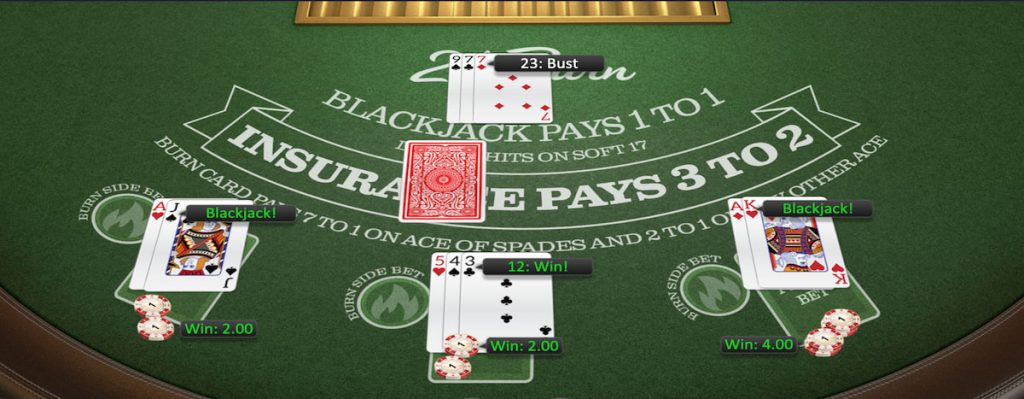
Card Values in Blackjack
One of the reasons blackjack appeals to many players is that its scoring system is simple and consistent across most game variants. The cards numbered 2 through 9 are worth their face value. The King, Queen, and Jack are all face cards and each counts as 10 points. The Ace is the only card with a flexible value. It can count as either 1 or 11 depending on which value benefits the hand. When counting a hand’s total, you simply add together the values of the individual cards.
| Card | Value | Notes |
|---|---|---|
| Ace | 1 or 11 | Flexible; counted as 11 unless it would cause the hand to bust. |
| 2-9 | 2-9 | Counted at face value. |
| 10 | 10 | Includes the 10-spot card. |
| Jack | 10 | A face card counted as ten. |
| Queen | 10 | Another face card worth ten. |
| King | 10 | Face card worth ten. |
The Ace’s Dual Value
The Ace’s ability to count as 1 or 11 allows for greater flexibility. For example, if you hold an Ace and a 6, the hand can be valued at 7 or 17. In the beginning, it makes sense to treat the Ace as 11, giving you a strong total of 17. If you then hit and draw a high card that would push the total above 21, the Ace automatically reverts to a value of 1, avoiding a bust.
This dual nature of the Ace creates two types of hands:
- Soft hand – any hand containing an Ace counted as 11. An Ace plus a 6, or soft 17, allows you to hit without fear of busting because the Ace can drop to 1.
- Hard hand – a hand that either does not contain an Ace or contains an Ace that must be counted as 1 to avoid busting. A 10 and 8 is a hard 18, while an Ace with 5 and 10 is a hard 16.
Understanding the difference matters because soft hands allow more aggressive hitting, while hard hands require caution.
Natural Blackjack
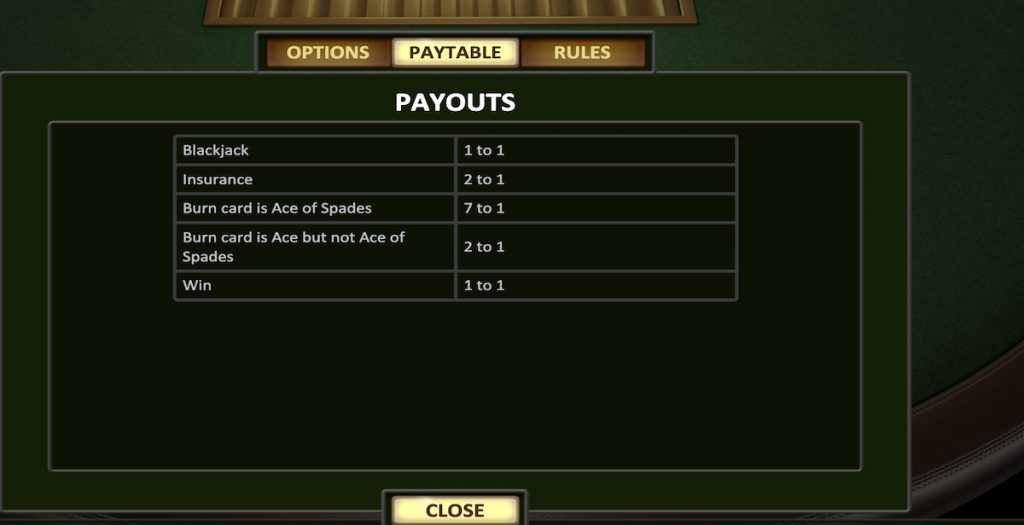
A blackjack, or natural 21, occurs when your first two cards are an Ace and any 10-point card, giving an immediate total of 21. This is the strongest hand and typically pays 3:2. If both player and dealer have blackjack, the round is a push and no money changes hands. In many casino rule sets, blackjack pays 3:2, but some variants offer 6:5, which increases the house edge.
Calculating Your Hand Total: Examples
Because blackjack totals rarely exceed 21, simple arithmetic is enough to determine your hand’s value:
- Number cards only – If you are dealt a 7 and a 9, your total is 16.
- Face card with number card – A Queen and a 5 equals 15.
- Hand containing an Ace – An Ace with a 6 can be 7 or 17. If you later draw a 7 and your total would become 24, the Ace reverts to 1 and the hand becomes 14.
Decisions During Play
Once you know your card values and total, you must decide whether to hit, stand, double down, split, or in some games surrender. Here are the basic options and when to use them:
- Hit – Take another card to improve your total. Use this when your total is low, for example 11, and the risk of busting is minimal.
- Stand – Take no more cards. You should stand when your total is strong relative to the dealer’s up-card.
- Double down – Double your bet and take exactly one more card. Many casinos allow doubling on any two cards. For instance, doubling with a total of 11 against the dealer’s low card is recommended.
- Split – When your first two cards are of equal value, you may split them into two hands, placing an additional bet. This option is especially advantageous with Aces and 8s.
- Surrender – Some games allow surrendering half your bet before you play the hand. When available, surrender can reduce losses on particularly poor starting hands.
The dealer’s actions are typically fixed. They must hit until their total is 17 or more, and in most casinos they stand on soft 17. Some variants require the dealer to hit soft 17, which slightly increases the house edge.
Basic Strategy Guidelines
Blackjack basic strategy is a mathematically derived set of rules telling players the best action for every possible hand. This guide can be simplified into a few quick rules:
- Stand on 12-16 against a dealer 2-6.
- Hit 12-16 when the dealer shows 7 or higher.
- Stand on a hard 17, but hit soft 17 if the dealer’s up-card is 2, 3, 4, or 8 and above.
- Stand on soft 17 if the dealer shows 5, 6, or 7.
- Always split Aces and 8s.
- Double down on 11 unless the dealer’s up-card is an Ace.
Following basic strategy reduces the house edge to about 0.54%, though the exact value varies depending on specific casino rules.

Card Counting: A Brief Overview
Card counting is an advantage-play technique used to track the ratio of high cards, tens and Aces, to low cards remaining in the shoe. A commonly used approach is the Hi-Lo system:
- Assign a value to each card – In Hi-Lo, cards 2-6 are counted as +1, 7-9 as 0, and 10 through Ace as -1.
- Keep a running count – As cards are dealt, add or subtract the card values to maintain a running total. A positive running count indicates more high cards remain, favouring the player.
- Calculate the true count – Because most games use multiple decks, divide the running count by the approximate number of decks remaining to get the true count.
- Adjust your bets – Increase your wagers when the true count is high and decrease them when it is low. Without adjusting bets, card counting becomes only an exercise in mental arithmetic.
Rule Variations and Their Impact
Although the values of blackjack cards stay the same across versions, the rules vary by casino and can significantly affect the house edge. For instance, some tables use six-deck, double-deck, or single-deck games. Some require the dealer to stand on 17, pay 3:2 for blackjack, allow doubling down on any two cards, and permit players to split up to four hands. Others require the dealer to hit soft 17 or pay 6:5 for blackjack instead of 3:2.
Other variations include European blackjack, where the dealer does not receive a hole card until players finish their hands, and rules regarding splitting tens. Before playing on platforms like OnlySpins casino or at land-based venues, always read the specific rules for that table or online game.
Using Blackjack Strategy Tools
Modern players can use online tools to improve their decision-making. A blackjack strategy calculator allows you to set game rules, input the dealer’s up-card and your hand, and receive the recommended action.
These tools explain each move, whether to hit, stand, split, or double, and help reduce mistakes. They are especially useful for beginners learning basic strategy and aiming to play more accurately.
Responsible Play and Final Thoughts
Blackjack combines chance with skill. Understanding card values and applying optimal strategy can narrow the house edge. Card values are straightforward: number cards count at face value, face cards count as ten, and Aces can be 1 or 11. Natural blackjacks pay extra, but even so, players should learn basic strategy rules, manage bankrolls wisely, and avoid ill-advised side bets like insurance.
Explore advantage play through card counting to tip the odds in your favour, though the technique requires discipline and might attract unwanted attention.
Finally, always remember that gambling should be for entertainment. Never wager more than you can afford to lose, and if you feel gambling may be becoming problematic, seek support. Understanding the rules and mathematics behind blackjack can make the game more enjoyable and improve your decision-making, but no strategy guarantees profit. Play responsibly, learn continuously, and enjoy the engaging balance of luck and skill that blackjack offers.