


Poker Cheat Sheet
Poker Cheat Sheets: A Comprehensive Guide for Australian Players
Poker is one of the most popular card games in Australia, both at land‑based casinos and in lively home games. New players often struggle to remember which hand outranks another, how betting rounds work or when it makes sense to call, raise or fold. Even experienced players sometimes need a quick reference to recall pot odds or the meaning of poker jargon. A poker cheat sheet is a convenient way to summarise these essentials. It condenses hand rankings, betting structures, position strategies, odds and lingo into an easy‑to‑review format so you can focus on making good decisions instead of recalling rules. This article distils information from several authoritative poker guides and presents a cheat sheet tailored to Australian players, with an emphasis on responsible gaming.

Understanding Poker Hand Rankings
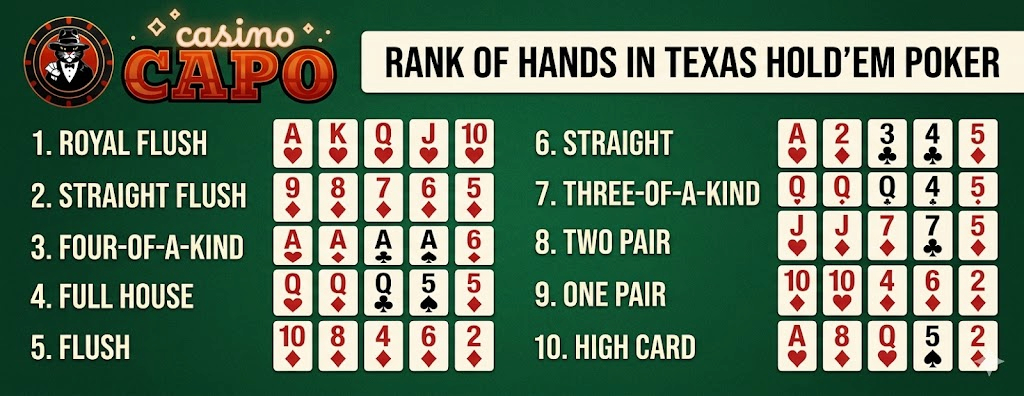
The strength of a poker hand determines who wins at showdown. Texas Hold’em and other variants share a ranking order descending from the rarest, most powerful hand to high card. New players often forget these rankings, which is why many home‑game hosts prepare a cheat sheet . Use the following list to keep the hierarchy straight:
- Royal Flush – the ultimate hand consisting of A‑K‑Q‑J‑10 all in the same suit. The strongest five-card hand is extremely rare, with only four possible royal flush combinations in a standard deck. Because of its rarity, even many hours of play may never produce one.
- Straight Flush – any sequence of five consecutive cards in the same suit (such as 9‑8‑7‑6‑5). It is second only to the royal flush.
- Four‑of‑a‑Kind – four cards of the same rank (e.g., four aces). Known as “quads,” this hand rarely appears but beats everything except a straight or royal flush.
- Full House – three cards of one rank plus two cards of another rank (e.g., three queens and two fives). Also called a “boat,” it ranks just below four‑of‑a‑kind.
- Flush – any five cards of the same suit in any order. The highest card in the flush determines its strength.
- Straight – five cards in sequential order of mixed suits (aces can be high in A‑K‑Q‑J‑10 or low in A‑2‑3‑4‑5).
- Three‑of‑a‑Kind – three cards of the same rank and two unrelated cards.
- Two Pair – two distinct pairs plus a fifth card.
- One Pair – a single pair of matching cards (such as two tens).
- High Card – when no player has a pair or better, the highest card in the hand decides the winner.
In most games, the rarer hands are also more valuable because they occur infrequently. Understanding this hierarchy and its probabilities allows you to judge whether it is worth chasing a draw or folding.
Probability quick reference
A cheat sheet should include key probabilities, particularly for draws. A typical poker odds cheat sheet summarises the chances of hitting specific hands or draws in Texas Hold’em: the probability of receiving a full house or better by the river is about 3.3%, flopping two pair or better is around 23%, and making a flush draw by the river sits near 19.6%. Meanwhile, flopping a set (three‑of‑a‑kind using a pocket pair) happens about 11.8% of the time. Numbers like these help you decide whether to continue when chasing a draw; if the odds of improving are slim, you should usually fold unless the pot is very large relative to the bet you must call.
Betting Rounds and Game Flow
Poker is played over several betting rounds. In Texas Hold’em, each hand begins preflop when the player to the dealer’s left posts a small blind and the next player posts a big blind that is typically twice the size of the small blind. After the blinds and any antes are paid, the dealer deals two face‑down “hole cards” to each player. The player to the left of the big blind (under the gun) acts first, with the options to fold, call (match the big blind), or raise.
Once all players have acted, the game proceeds to the flop: the dealer spreads three community cards and the first remaining player to the dealer’s left may check or bet. When at least two players remain after the flop betting, the dealer reveals a fourth community card known as the turn and another betting round follows. The final community card is called the river; after betting on the river, if more than one player remains, the hand goes to a showdown. At showdown the last aggressor reveals their cards first, and any player who cannot beat that hand may muck (fold without showing). Knowing the order of these rounds and when you must act is crucial, especially in fast‑paced Australian cash games where players can miss their turn if they are not attentive.
Positions and Strategic Implications
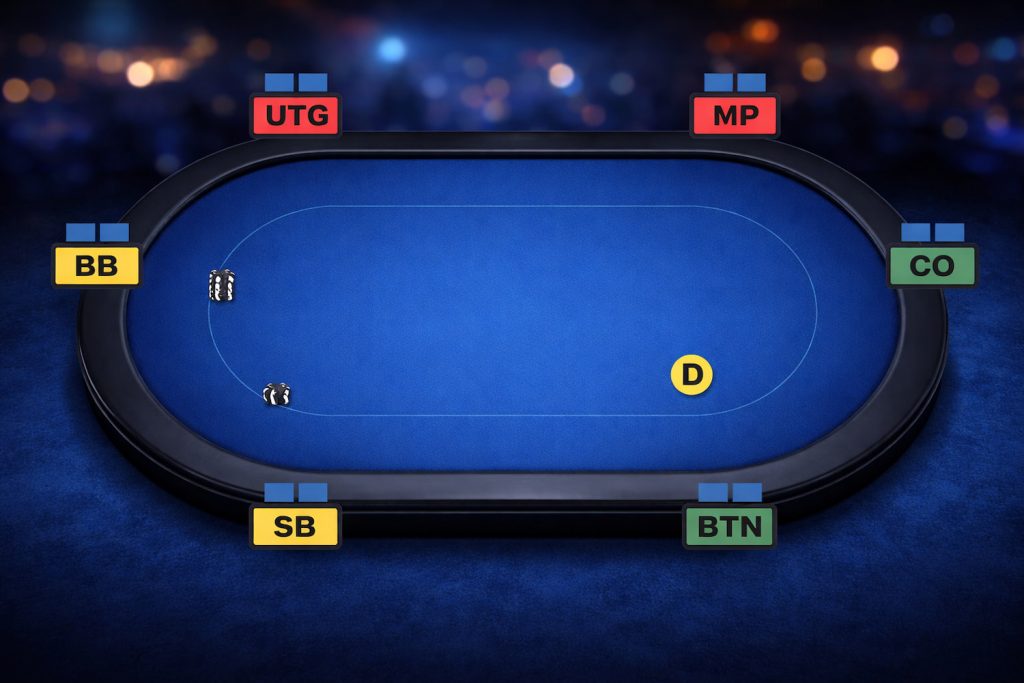
Your position at the table significantly influences how many hands you should play. The common positions on a nine‑handed table include under the gun (UTG), early positions, middle positions, cutoff, button, small blind and big blind. Players seated UTG act first preflop; because many opponents remain to act and can raise, you should only play very strong hands there. In early position you can loosen your starting range slightly, but you should tighten up if aggressive players to your left frequently raise. Middle position offers more freedom since several players have already folded; here you can add small pocket pairs and suited connectors to your range.
Sitting in the cutoff or button is powerful because only the blinds act after you. The cutoff is ideal for opening pots with a wide range of hands unless the button or blinds are prone to three‑betting. The button (dealer) is considered the most profitable seat; you act last on all post‑flop streets, so you can raise liberally and even call earlier raises with a wider range. Conversely, the blinds are the worst positions; you have already invested chips and must act first in every post‑flop round, so stick to premium hands and hands that can flop strong draws.
A similar but slightly shorter list applies at 6‑handed tables, which are common in online rooms and some Australian casinos. In 6-handed games, the six seats are typically labelled UTG, middle position (MP), cutoff, button, small blind and big blind. The player under the gun acts first, followed by MP and so on. Because fewer opponents remain, you can play slightly more hands in each position compared with nine‑handed games.
Preflop Starting Hand Strategy
The first decision in any hand is whether to play your hole cards. Beginner strategy charts often recommend folding the vast majority of hands dealt to you. Standard poker strategy suggests that if no one has entered the pot, you should almost always open with a raise rather than a limp. The strength of your starting range depends on your position: from UTG you might open only premium pairs and strong broadway cards, whereas from the button you can raise with a wide range of suited connectors, small pairs and even weaker suited hands.
When another player has already raised, aggressive play is usually rewarded. A common strategic approach is to re-raise (3-bet) with strong hands and folding weaker ones instead of merely calling. Online players often express standard preflop raise sizes as multiples of the big blind, such as 2.5x for an open raise and 3x or more for a 3-bet. In live cash games, larger raises around 5× the big blind are common. Remember that acting in position (when you act after your opponent on subsequent streets) gives you a significant advantage, so consider this when choosing whether to call or raise.
Probability of being dealt premium hands
Patience is critical because premium starting hands are rare. In poker, pocket aces (AA) occur only about 0.45% of the time and any hand considered QQ+/AK appears about 2.6%. The odds improve slightly as you widen your range, but even medium pairs and strong aces occur in fewer than 10% of deals. This rarity explains why experienced players fold so many hands preflop and avoid the temptation to play every deal.
Probabilities, Odds and Calculations
Poker is fundamentally a game of probability. Understanding the odds of hitting certain hands or draws helps you determine whether a bet is mathematically justified. Standard poker probability charts show that: flopping a pair or better occurs roughly 32% of the time, while making a flush or better by the river has a probability around 0.8%. Drawing to a flush from the flop happens about 10.9%, and completing that flush by the river occurs 19.6% of the time. A straight draw on the flop has roughly a 31.5% chance of completing by the river.
A widely used shortcut known as the 4/2 rule helps simplify odds calculations. Count your outs (cards that complete your draw) and multiply by four to estimate the chance of hitting by the river and by two to estimate the chance of hitting on the next card. For example, a flush draw has nine outs; using the 4/2 rule, the approximate chance of completing by the river is 9×4 = 36%, which is close to the true value. This rule is especially helpful at live tables where you cannot run exact simulations.
When considering whether to call a bet with a draw, compare the pot odds (the ratio of the current pot to the cost of calling) to your hand equity (your probability of winning). If your draw has a lower chance of hitting than the pot odds require, fold; otherwise, call or raise to put pressure on opponents. Also note that the preflop win probability of your hand depends on your opponent’s range. For example, a suited connector such as T♠9♠ has about 37.2% equity against an under‑the‑gun raising range at a 6‑handed table. Tools like Equilab can calculate exact numbers, but at the table the 4/2 rule and basic probability tables are often enough.
Quick Tips and Common Poker Jargon
Cheat sheets often include definitions of common poker terminology so players are comfortable with the lingo. Poker cheat sheets often include common terminology used at the table that appear frequently in casino games. Here is a condensed glossary:
- Blinds – forced bets posted before the cards are dealt; the small blind is usually half the big blind.
- Button – a disk indicating the nominal dealer; players on the button act last on all post‑flop streets.
- Check – choosing not to bet when no bet has been made.
- Raise – increasing the size of the current bet.
- Fold – discarding your hand and forfeiting the pot.
- Call – matching the current bet.
- All‑in – betting all of your remaining chips.
- Pot – the total amount of chips wagered in the hand.
- Flop, Turn, River – the three, four and fifth community cards respectively.
- Nuts – the best possible hand at a given moment.
- Tilt – a state of frustration leading to poor decisions.
- Drawing dead – continuing with a hand that cannot win regardless of future cards.
- Bad beat – losing despite being a strong favourite.
- Fish/Shark – casual players who make mistakes are called fish, while sharks are seasoned players who prey on them.
Familiarity with these terms ensures you understand dealer announcements and table talk in Australian casinos and home games.
How to Use a Cheat Sheet
A cheat sheet is most effective as a learning aid. Cheat sheets include rankings, basics, and odds to help players learn. Study them to build memory, but remember they reinforce knowledge rather than replacing judgment. They cannot account for game dynamics, opponent tendencies or the psychological aspects of poker.
Australian Context and Responsible Play
Poker has a vibrant Australian following, ranging from Melbourne’s World Series of Poker-Asia Pacific events to lively pub leagues. As you incorporate cheat‑sheet knowledge into your game, remember to gamble responsibly. The ACMA enforces strict gambling advertising rules, while local casinos follow anti-money-laundering and responsible-play guidelines. Know your limits, set a budget before you sit down and never chase losses. Many players use cheat sheets to understand poker odds and strategy, helping reduce reckless decisions and promote healthier gaming. If you play online or browse top platforms like Only Spins, choose reputable offshore sites and familiarise yourself with deposit limits and self‑exclusion tools.
Conclusion
A poker cheat sheet condenses complex rules, hand rankings, positions, probabilities and terminology into a handy reference. By studying the ranking hierarchy and understanding rounds, positions, and jargon, you create a structural foundation for better decision-making. Incorporate starting-hand guidelines and appropriate raise sizes while using the 4/2 rule to assess draws effectively. Above all, remember that poker is a game of skill and patience. Cheat sheets can’t make decisions for you but provide the knowledge and discipline necessary to succeed at the tables.