


David Walsh
The Mathematical Renegade: How David Walsh Beat the Odds and Built an Empire
In the world of professional gambling, few names command as much respect, mystery, and controversy as David Walsh. Often described as a “multimillionaire professional gambler” or an “art collector with a gambling problem,” Walsh is, in reality, one of the most brilliant applied mathematicians of our time.
For the community here at CasinoCapo, Walsh represents the ultimate dream: the player who didn’t just win, but systematically deconstructed the gambling industry to fund a cultural revolution. This is the story of how a social misfit from Hobart used algorithms to conquer global betting markets and build MONA (the Museum of Old and New Art).
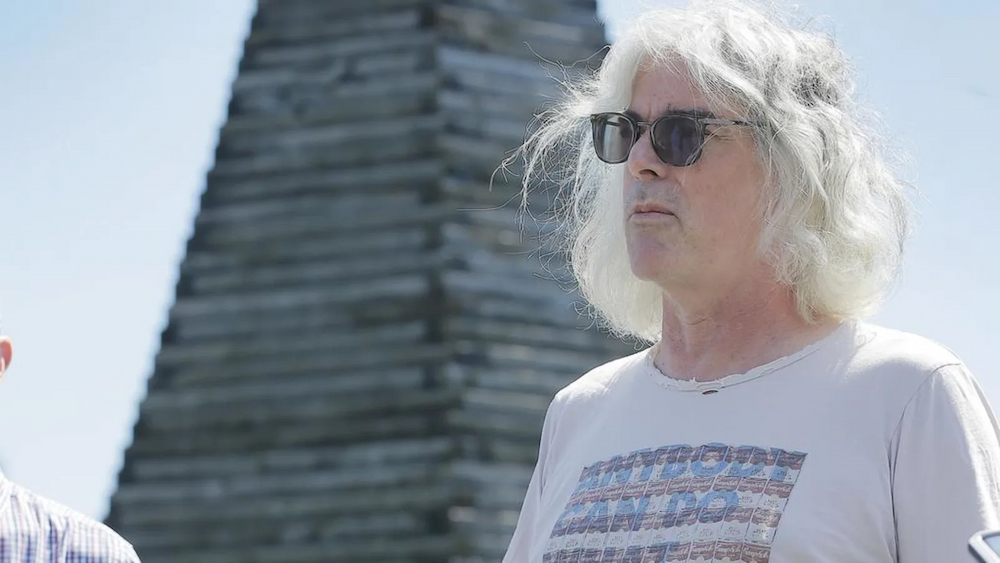
The Genesis of a Genius: From Glenorchy to the Casino Floor
Born in 1961 in Glenorchy, Tasmania, David Walsh was never a “natural” at the poker table in the sense of bluffing or intuition. Instead, he was a student of mathematics and computer science at the University of Tasmania. His laboratory wasn’t a classroom, however; it was the Wrest Point Hotel Casino.
It was here that Walsh met Zeljko Ranogajec, another mathematical prodigy. Together, they realized that blackjack wasn’t a game of pure luck; it was a game of probability. By perfecting card-counting techniques, they began to consistently extract profit from the house. This was the foundation of what would become the world’s most successful “Punters Club.”
The “Bank Roll” Syndicate: Precision at Scale
By the mid-1980s, Walsh and Ranogajec moved beyond the blackjack tables of Tasmania. They formed a syndicate known as “The Bank Roll.“ This wasn’t a group of lucky guys at a pub; it was a high-tech corporate operation employing dozens of data analysts, mathematicians, and programmers.
The Algorithm Over the Instinct
Walsh’s approach was revolutionary. While most bettors rely on “gut feeling” or basic statistics, Walsh built complex algorithms that processed millions of data points.
- Horse Racing: They analyzed everything from track moisture and wind speed to the genetic lineage of the horses and the psychological state of the jockeys.
- The Edge: Walsh understood that you don’t need to win every time. You only need a mathematical “edge” of 2% to 4%. If you turn over billions of dollars with that edge, the profit is inevitable.
- Global Reach: When Australian bookmakers grew tired of losing to Walsh, he took his operation global, dominating betting exchanges in Hong Kong, the UK, and the US.
The Battle with the Tax Man (ATO)
One of the most fascinating chapters in Walsh’s career is his decade-long standoff with the Australian Taxation Office (ATO). In Australia, gambling winnings are generally tax-free because they are considered “recreational.” However, the ATO argued that Walsh’s operation was so sophisticated, so automated, and so profitable that it constituted a professional business.
The legal battles revealed the staggering scale of his success. At one point, the syndicate was reportedly responsible for a significant percentage of the total betting turnover on certain exchanges. Eventually, Walsh reached a confidential settlement with the ATO in 2012, a move that finally brought his “underground” wealth into the daylight.
MONA: A Temple Built on “Sin”
In 2011, Walsh opened MONA (Museum of Old and New Art) in Hobart. He invested $75 million of his gambling winnings to create the largest private museum in the Southern Hemisphere.
Walsh famously describes MONA as a “subversive Disneyland.” It features provocative art exploring themes of sex, death, and evolution. For Walsh, the museum is an extension of his gambling philosophy: it’s a gamble on culture.
- Financial Reality: Recent reports (late 2025) indicate that MONA has faced significant financial hurdles, sometimes losing millions annually. Yet, Walsh remains unbothered. He views the museum as his “legacy project,” a way to return his “socially useless” gambling wealth back to the community in a way that sparks conversation and controversy.
Walsh’s Stance on “Pokies” and Ethical Gambling
Despite making his fortune in the gambling world, Walsh is a vocal critic of the poker machine (pokies) industry. In several interviews, he has lashed out at the powerful families and corporations that control Tasmania’s gaming machines.
His logic is simple and ethical:
- Skill vs. Predation: Walsh believes in games where skill and math can win (like horse racing or blackjack).
- The Math of Poverty: He views pokies as a “tax on the poor,” machines specifically designed to ensure the player cannot win in the long run.
At CasinoCapo, we echo this sentiment: the best player is an informed player who understands the mechanics of the game.
Key Takeaways for the Modern Player
What can the CasinoCapo community learn from the “Tassie Devil” himself?
A. Embrace the Data
Walsh didn’t win by being “lucky.” He won because he understood the numbers better than the people setting the odds. In today’s online casino world, you can apply the same mindset. Track your wins and losses, learn how RTP (Return to Player) works, and never place a bet just on impulse.
B. Bankroll Management is King
The “Bank Roll” syndicate survived because they never bet more than their mathematical model allowed. Even during “downswings” (periods of losing), Walsh stayed the course because he trusted the long-term probability.
C. Emotional Detachment
To Walsh, a $10 million loss was just a data point. While most of us aren’t playing for millions, the lesson remains: never chase losses and never let your heart dictate your betting strategy.
D. The Concept of “Vigorish” (The Vig)
Walsh’s entire career was built on finding ways to minimize the house edge or finding “overlays” where the market mispriced an outcome. Understanding how the house makes its money is the first step to beating it.
The Legacy of David Walsh
Today, David Walsh remains an enigma. He lives in a penthouse atop his museum, continues to refine his betting models, and remains one of the most influential figures in Australian art and gambling history.
Walsh proved that the house can be beaten, but only by those willing to work harder than the house itself. He took the “dark” money of gambling and turned it into a cultural lighthouse that put Tasmania on the global map.
Conclusion
David Walsh is a reminder that gambling, when approached with the rigor of a scientist and the discipline of a monk, can be a transformative force. He didn’t just play the game; he solved it.
For the readers of CasinoCapo, let Walsh’s story be an inspiration. Whether you are hitting the tables or analyzing the racing form, remember: Fortune favors the prepared mind.






 EN
EN


